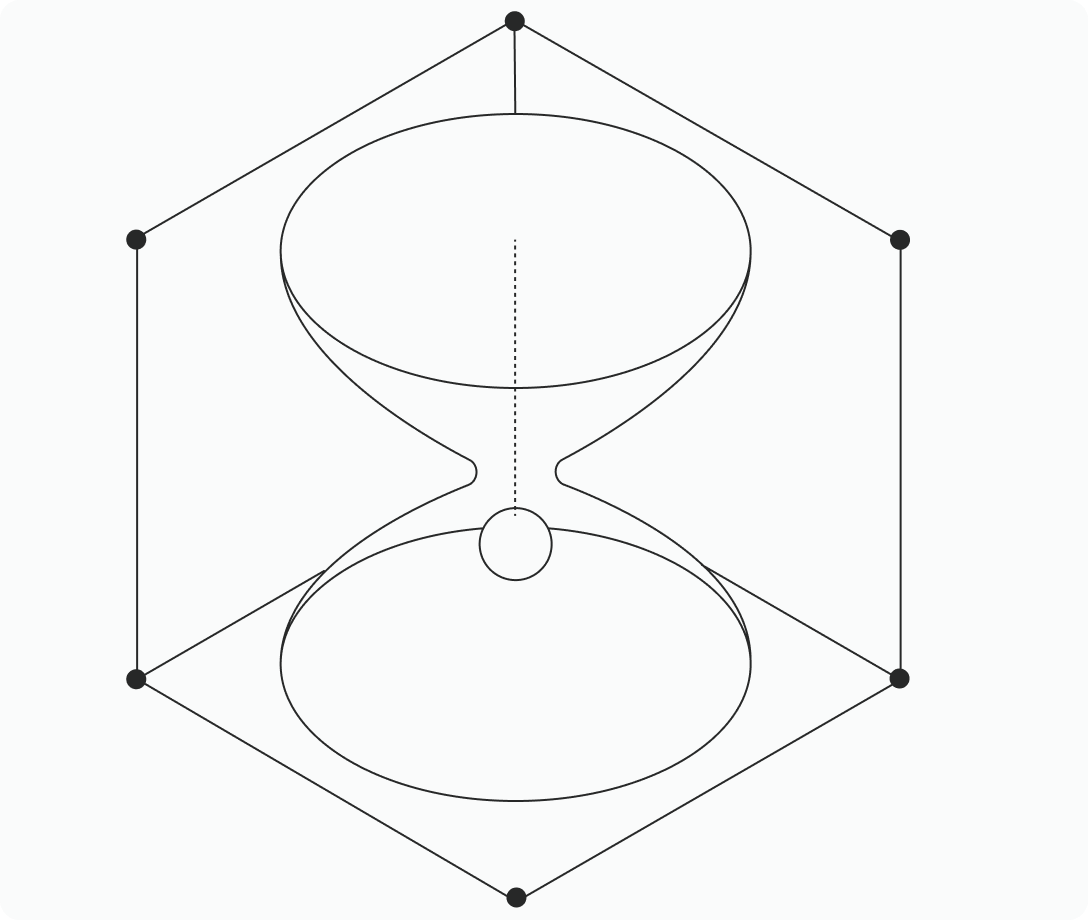
Multivariate measurement and calibration is not fundamentally different from the univariate case, rather, the two correspond one-to-one in every aspect. The scientific "mother discipline" of both cases is time signal processing, not statistics, and everything becomes simple when looked at from the angle of time signal processing. There is a simple general formula that describes the solutions of all multivariate calibration methods. There are only two inputs into this formula, namely, the spectral signal (response vector) and the spectral noise (covariance matrix). The two variables are easily recognized when looking from the point of view of time signal processing. The measurement results ("predictions") are optimized, in the mean-square error sense, when both variables are "matched" i.e., when both are good estimates of the true parameters. This is a direct analog to the famous matched filter a.k.a. Wiener filter you are carrying around in your mobile phone. In spectroscopy, the method has become known as "science based calibration" (SBC).
The SBC method is shortly reviewed and the advantages for calibration of spectroscopic analyzers are given. Compared to PLS, cost and time of calibration is drastically reduced, often by as much as 80%, at typically better results.
The correct mathematical definitions of sensitivity and specificity in the multivariate case are given. Both limits are testable from first principles, i.e., from measurable pieces of spectroscopic data. Current standards for testing specificity (ASTM 1655 etc.) are shown to be wrong and misleading. The importance of applying spectroscopic expertise and application knowledge to the calibration process is stressed, as is the need to scientifically estimate both the "spectral signal" and the "spectral noise" parts required in calibration. Both estimates are important because proof of specificity is a two-step process. The user must first prove that the multivariate measurement measures "the right thing" and then, second, that this "correct" measurement is not affected by any unspecific correlations.